
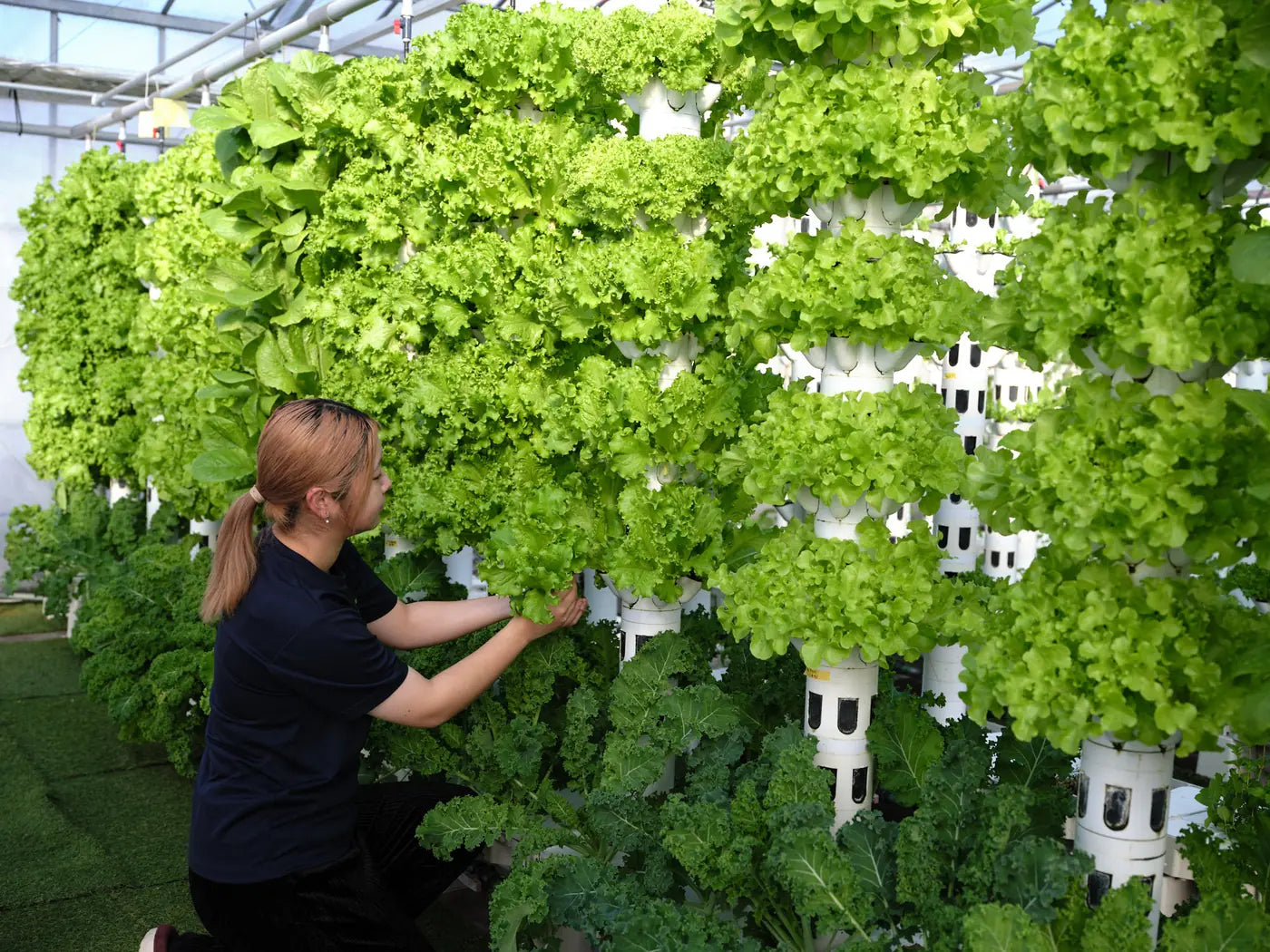
A farm that pays wages.
An Aquponi farm is a workplace. The work is real and it is paid: planting, harvesting, feeding fish, keeping water in balance. In Japan, that model runs inside welfare-employment and community programs. This page shows the model as it operates there, and what it points to for US programs.
Supported-employment worksites.
In Japan, welfare-employment providers run Aquponi farms as worksites. The daily work splits into clear, teachable tasks that suit a range of abilities and schedules, and every role produces food.
Job training on a working system.
The same structure works for job training: growing, water care, and food handling, learned on a live farm.
Community and vocational programs.
Structured, repeatable tasks with visible results. In Japan, our farms anchor welfare-employment programs; the same model fits vocational and community organizations in the US.
Food security as a program.
Production-scale systems for food security and drought resilience. Production capacity that stabilizes food procurement and reports cleanly against sustainability targets. In the model, a municipally anchored farm pays local wages while it grows local food.
One farm, as it runs today.
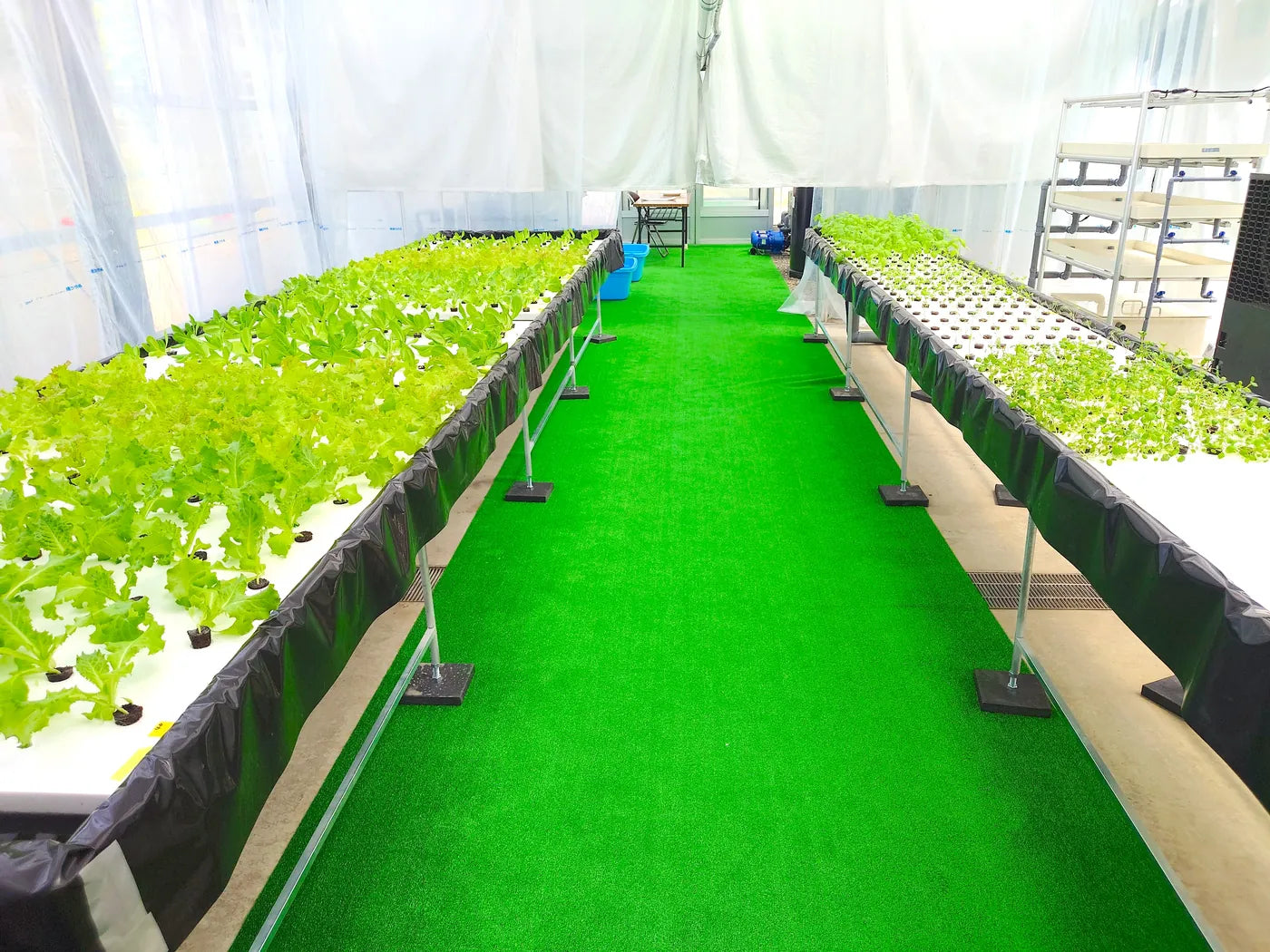
One documented example, not a complete list.
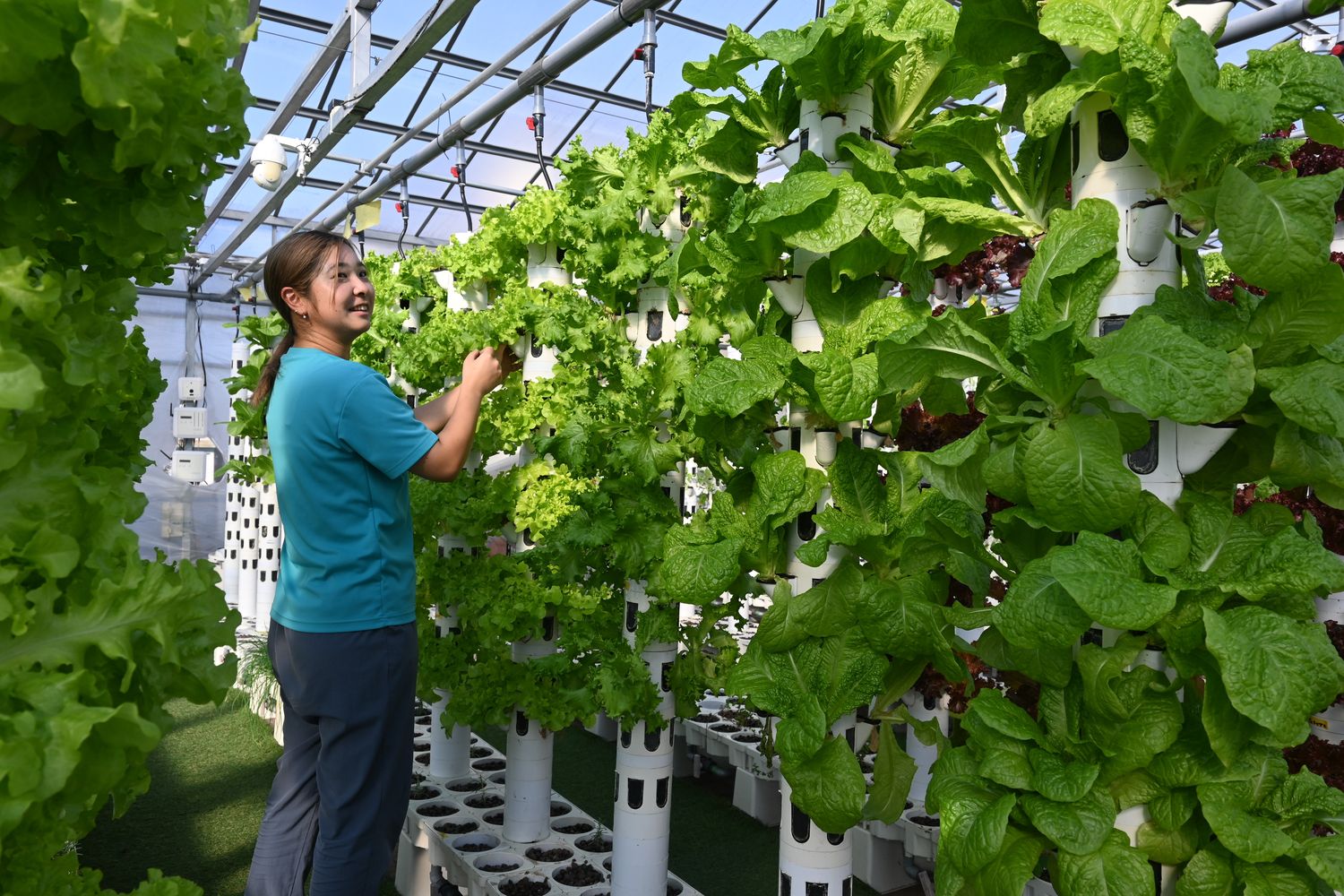
What this means for US programs.
The structured tasks, training, and monitoring that carry the Japanese programs are built into the system. A US program would start from those.
There is no US program yet. When there is one, it will be on this page. As the first US sites are planned, organizations interested in the model belong in that conversation from the start.