
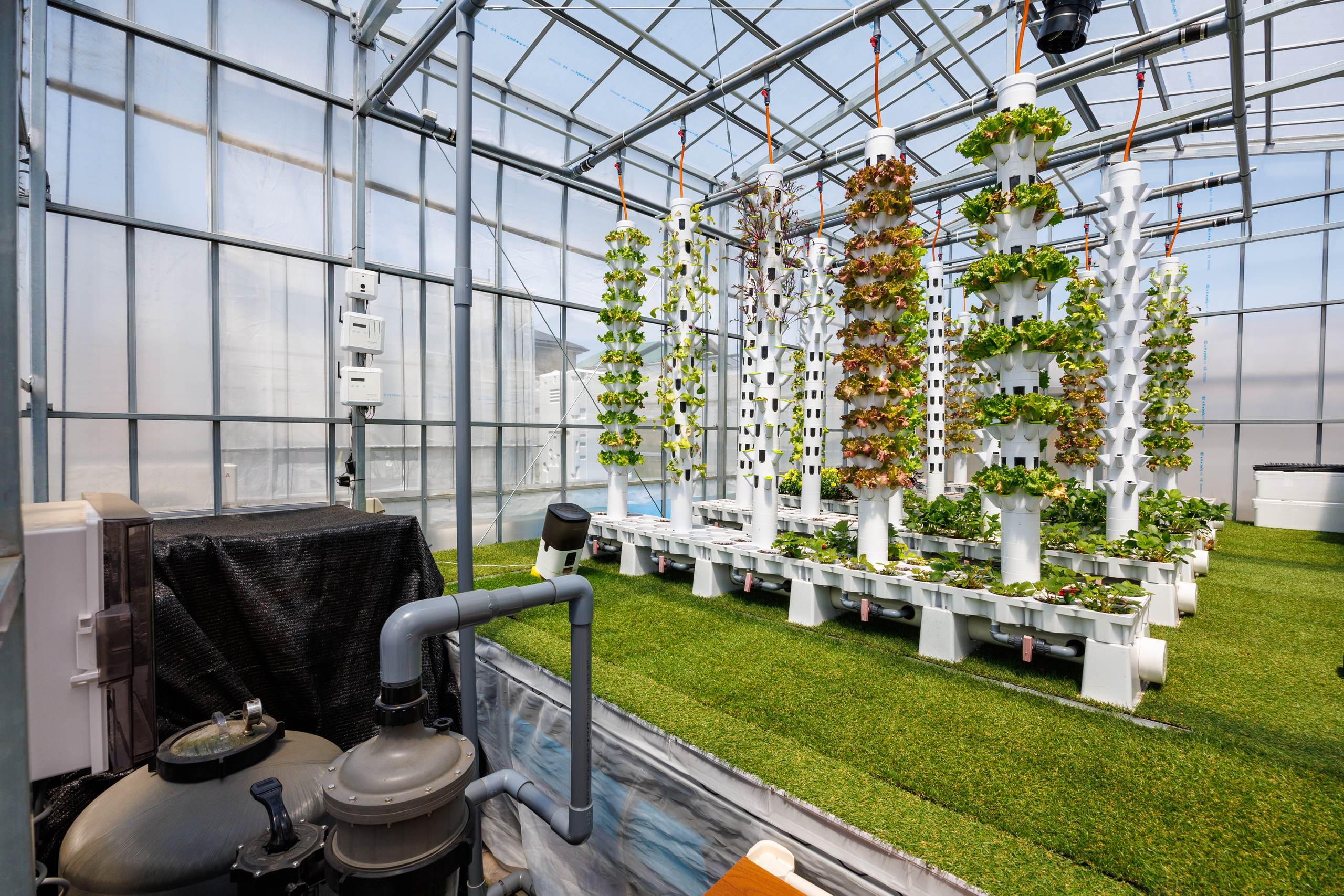
One source, from first drawing to the crop leaving the site.
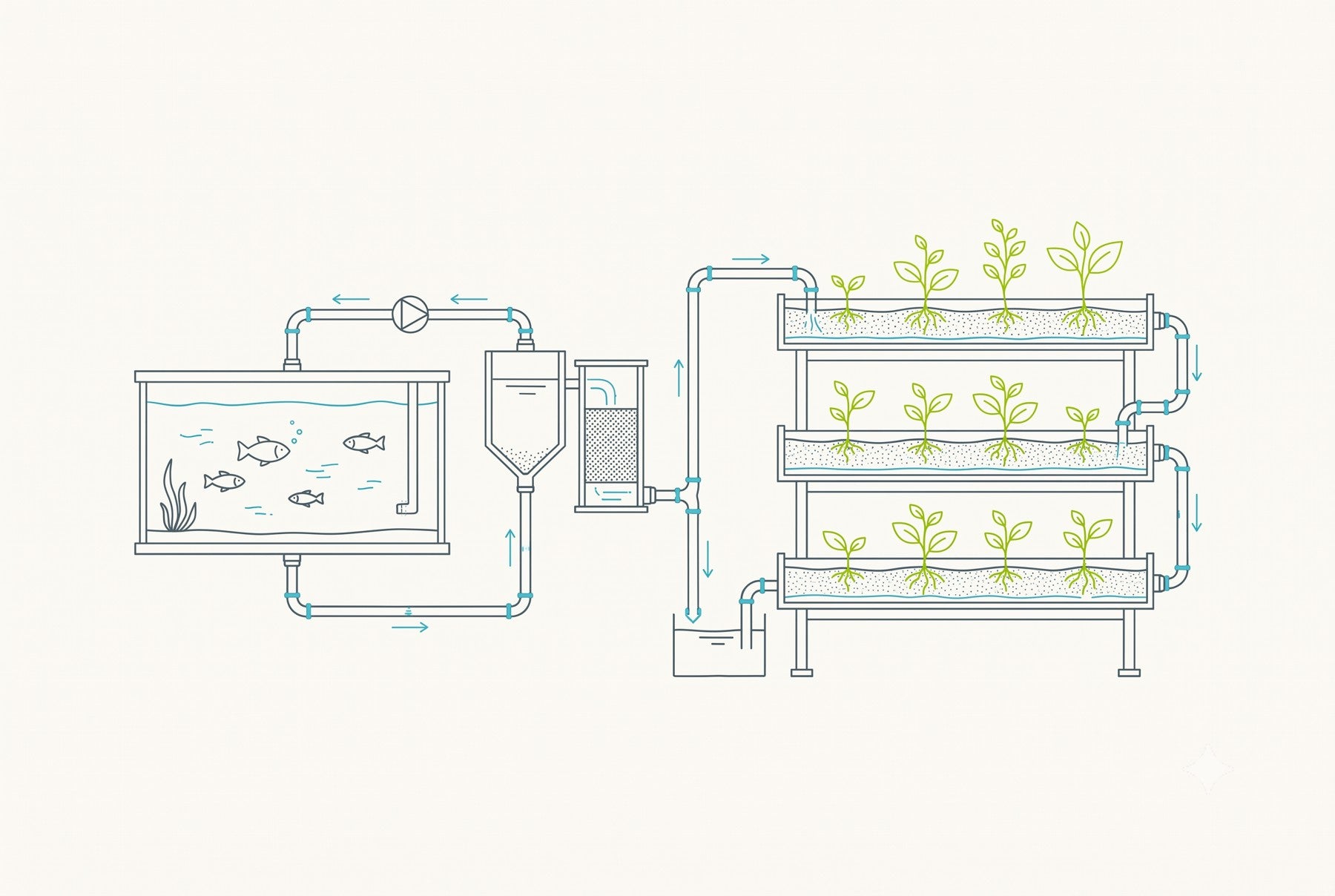
Aquaponics is one system doing two jobs. Fish feed the plants, plants clean the water, and the water goes back to the fish. Nothing synthetic goes in and no wastewater comes out.
The biology is well understood. Making it work at commercial scale is engineering: how the water moves, how the system fits the building, and whether the people running it can see what is happening inside.
Aquponi holds the design, the research, the data, and the training in one team.
One team holds all four.
Design, research, data, and training, in one place.
Farm design and build
From large commercial farms down to small systems for supported-employment programs, built on patents granted in Japan and years of construction and maintenance experience.
Research and development
Ongoing work on how water, nutrients, and energy move through a system. That research is what each farm is sized on.
Technology and data
Growing, environment, and task data collected in one place, with automatic reports. The same data lets our team support your farm remotely.
Operator training
Classroom sessions before installation and hands-on training after it, as part of handover.
Three bed types. Chosen by crop, not by preference.
Most commercial sites run towers or rafts. Media beds suit fruiting crops and smaller systems. The crop and the site decide.
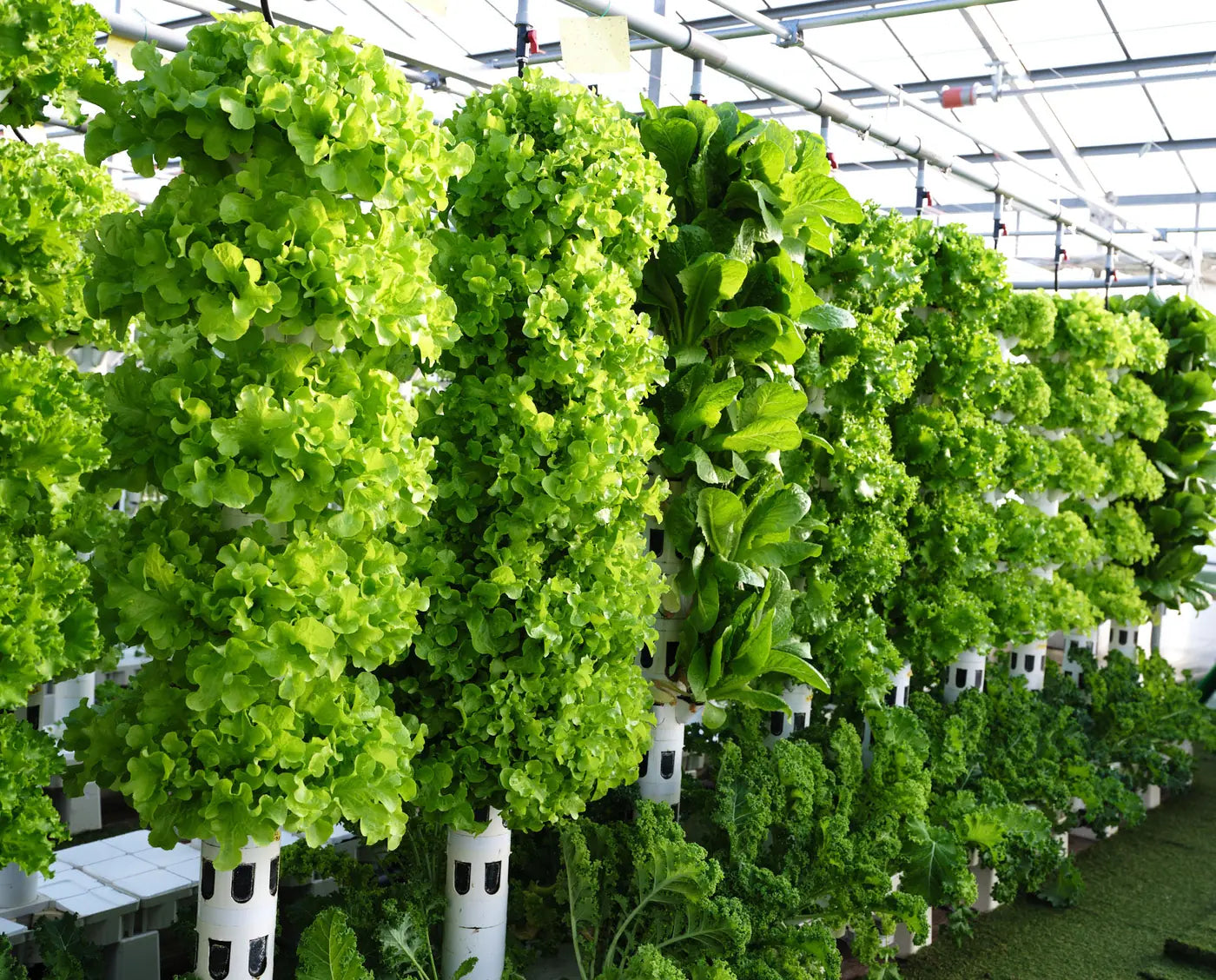
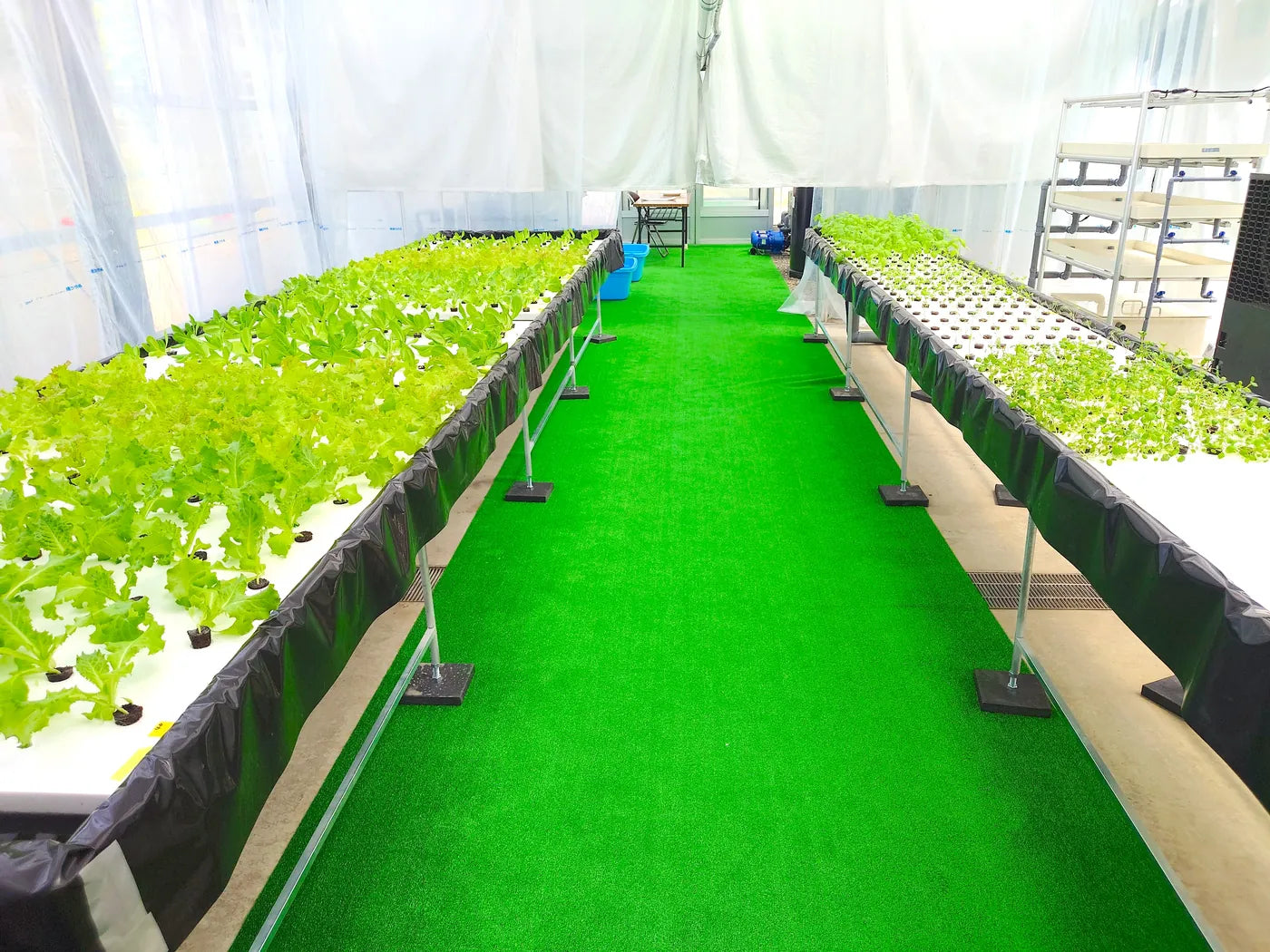

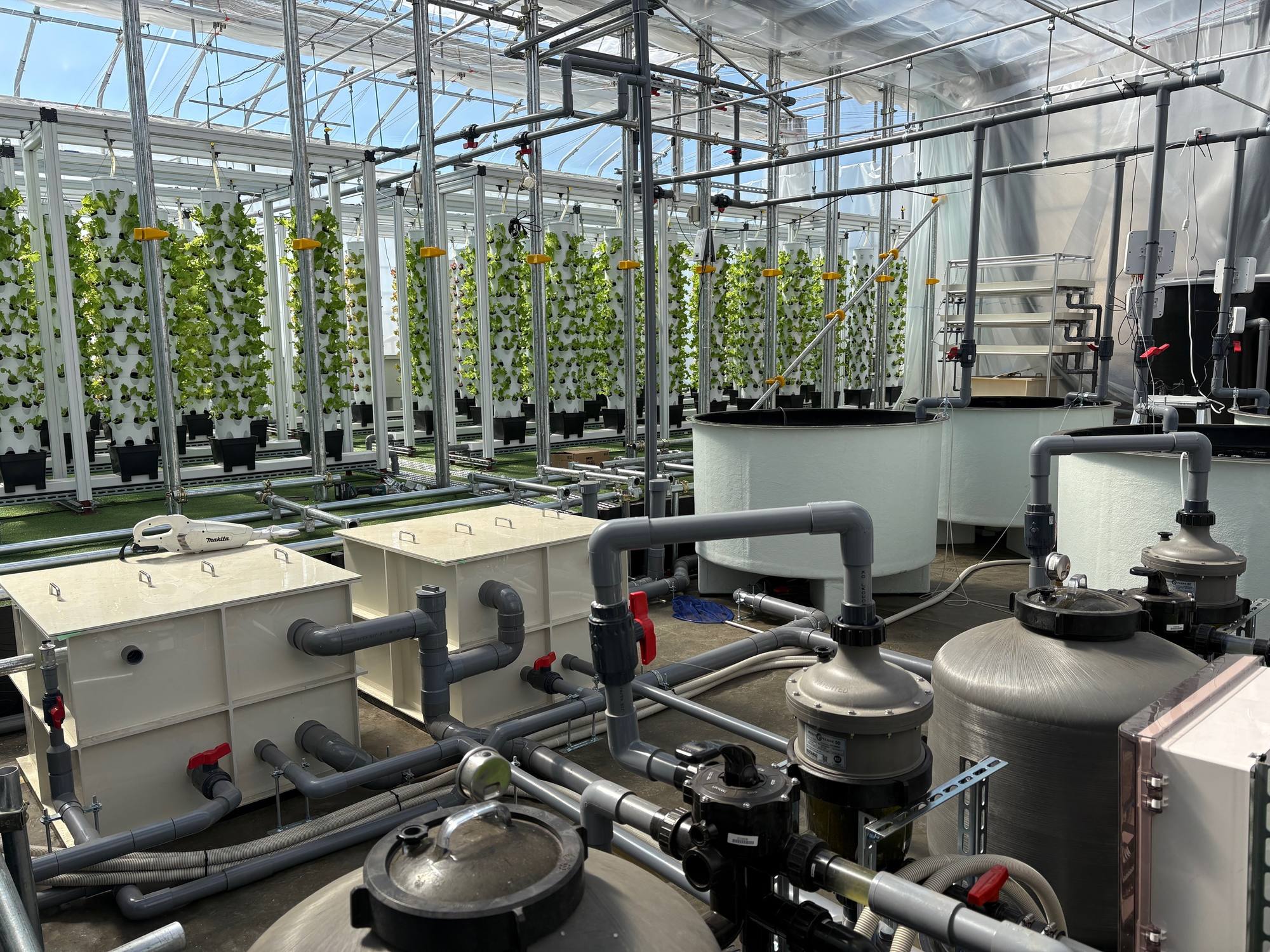
Vertical tower
A thin stream of water runs through the towers or channels, and the roots sit in that flow. Stacked upward as towers, it grows far more on the same floor area. Laid flat, it suits low ceilings. Light either way, and the usual choice for leaf crops.
| Best for | Leaf crops, herbs |
| Scale | Commercial |
| Structure | Light, stackable, vertical or flat |
DWC
Plants sit on rafts floating on the tank, roots hanging in the water. All that water holds temperature and chemistry steady, which makes it forgiving at scale.
| Best for | Leaf crops |
| Scale | Commercial |
| Structure | High water volume |
Media bed
A bed of gravel or clay pebbles that floods and drains on a cycle. It supports heavier plants and houses the bacteria, so it suits fruiting crops and small systems.
| Best for | Fruiting crops, trees |
| Scale | Small to mid |
| Structure | Medium filled |
Amenity Scale
What a project includes.
Design, installation, start-up, training, monitoring, and first-year remote support. No wastewater discharge permit is needed at this scale.
Institutional Scale
Scoped by consultation.
Larger projects are scoped and costed at assessment.
The dataset
Every farm Aquponi has built since 2014 reports into one record: how each crop performed, how the fish grew, how the water behaved, and the conditions around them.
The record is why a system can be sized for a site that has never grown anything before.
What is proven, and what is still in trial.
A line leaves trial only after consistent results at more than one site over more than one season. Until then it stays marked.
In trial
Seawater aquaponics
In trialFew working examples exist anywhere. Salt water is harder to manage. It matters because island and coastal sites pay the most for imported food.
Fruiting crops
In trialThese grow, but the recipes are still being refined. Fruiting crops behave differently from leaf crops, and they take space that leaf crops would use.
Marine species and shrimp
In trialRunning in closed systems in Japan. Not cleared for the US, and no US species is confirmed. Nothing on this line is offered for sale.
Every system is sized to one site.
Tell us the building, the climate, and what you need it to produce.